FREE FOOD SAMPLE ON FIRST ORDER £10+ • FREE DELIVERY OVER £25
How Big Should a Hamster Cage Be? Minimum Enclosure Size Guide for Healthy Hamsters
A guide on purchasing suitable hamster enclosures/cages
HAMSTER CARE HUB
1/12/2025
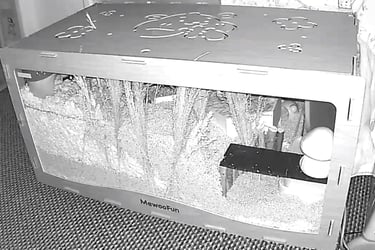
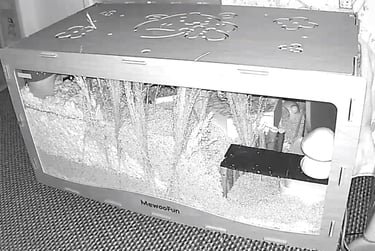
Side view
Night cam
Hamsters need a minimum enclosure size of 100cm x 50cm x 50cm, with larger habitats recommended for optimal welfare and natural behaviours.
Hamster Enclosure Size Guide: Why Bigger is Always Better
What Size Enclosure Does a Hamster Need?
Despite their small size, hamsters require a surprisingly large enclosure to live healthy, enriched lives. Current welfare recommendations suggest a minimum enclosure size of 100cm x 50cm x 50cm for all hamster species, including Syrian and dwarf hamsters.
Unfortunately, many commercially available hamster cages sold in pet shops & online retailers still fail to meet these minimum welfare recommendations. New hamster owners are often unaware that some cages marketed specifically for hamsters may not provide adequate floor space or bedding depth for natural behaviours.
Providing a suitable enclosure is one of the most important aspects of responsible hamster ownership & can significantly improve your hamster's physical and psychological wellbeing.
Signs Your Hamster's Enclosure May Be Too Small
When a hamster does not have enough space, enrichment or bedding depth, stress-related behaviours can develop. These behaviours are often attempts to escape or cope with an unsuitable environment.
Common signs include:
Bar biting
Climbing enclosure walls or hanging from the roof of the cage
Constant attempts to escape
Excessive grooming
Hair loss caused by over-grooming
Chattering teeth
Persistent chewing of cage furniture
Scratching, clawing or digging at cage corners
Restlessness & hyperactivity
Repetitive or obsessive behaviours
These behaviours may indicate that your hamster needs a larger enclosure, deeper bedding, additional enrichment or a combination of all three.
Female Hamsters Often Need More Space
Female Syrian hamsters are particularly well known for being highly active & demanding larger territories. While the recommended minimum enclosure size is 100cm x 50cm, many female Syrians thrive in enclosures measuring 120cm or larger.
Some hamsters, often referred to as 'ghost hamsters', naturally spend much of their time hidden away. Even though they may be less visible, they still require the same amount of space and enrichment as more active individuals.
Providing larger enclosures, deep bedding, tunnels, hides, foraging opportunities & suitable exercise wheels helps encourage natural behaviours & supports overall welfare.
Why Deep Bedding Matters
A suitable hamster enclosure should allow for a minimum of 8 inches (20cm) of bedding, with deeper areas wherever possible.
Deep bedding enables hamsters to:
Create natural burrow systems
Build sleeping chambers
Store food
Feel secure & protected
Display instinctive behaviours that are essential for good welfare
Wire cages often make it difficult to provide sufficient bedding depth, which is why many owners choose glass, acrylic or enclosed habitats with deep bases.
Recommended Hamster Enclosures
The following enclosures meet or exceed the recommended minimum size requirements & allow for deeper bedding. These recommendations are based on dimensions & suitability for hamster welfare.
PawHut 115cm
Approximate size: 115cm x 57cm x 55cm
Suitable for Syrian & dwarf hamsters
Deep base suitable for burrowing substrate
Need tiling & sealing as hamster will chew their way out
Bucatstate 2.0
Approximate size: 100cm x 50cm x 52.5cm
Meets minimum enclosure recommendations
Deep bedding area
Bucatstate 3.0
Larger upgraded version of the 2.0
Additional space for enrichment and natural behaviours
Most popular
Niteangel Bigger World
Premium enclosure with excellent visibility
Suitable for deep bedding setups
Popular among experienced hamster owners
Mewoofun Wooden Hamster Cage
Good visibility
Top-opening access
Deep substrate capacity
Skyline Marrakech 120
Approximate length: 120cm
Suitable for larger Syrian hamsters
Allows generous bedding depth
Jungle Pets Small Animal Tanks
Available in various sizes
Platform-free layouts maximise usable floor space
Suitable for deep burrowing setups
Important Disclaimer
Treats 4 Squeaks has no affiliation, sponsorship or commercial partnership with any of the brands listed above. These recommendations are provided solely to help hamster owners identify enclosures that better meet modern welfare standards.
Owners should always research products carefully and assess whether an enclosure is suitable for their individual pet's needs. Treats 4 Squeaks accepts no responsibility for the use of any products mentioned.
Frequently Asked Questions
What is the minimum cage size for a hamster?
The recommended minimum enclosure size for any hamster species is 100cm x 50cm x 50cm, although larger enclosures are strongly encouraged.
Is a 120cm enclosure better for a Syrian hamster?
Yes. Many Syrian hamsters, especially females, benefit from enclosures measuring 120cm or longer due to their high activity levels & larger territorial requirements.
Why does my hamster keep biting the bars?
Bar biting is commonly associated with stress, boredom, insufficient space or a lack of enrichment. Upgrading enclosure size & increasing enrichment opportunities can help reduce this behaviour.
How deep should hamster bedding be?
A minimum depth of 8 inches (20cm) is recommended, with deeper areas preferred to allow natural burrowing behaviour.
Can dwarf hamsters live in the same size enclosure as Syrian hamsters?
Yes. Dwarf hamsters benefit from the same minimum enclosure size recommendations and often make full use of larger habitats despite their smaller size.
Are pet shop hamster cages always suitable?
Not necessarily. Some cages marketed for hamsters may not meet current welfare recommendations for floor space or bedding depth. Always check dimensions carefully before purchasing.
What enrichment does a hamster need?
Hamsters benefit from:
Deep bedding
Multiple hides
Sand baths
Tunnels
Cork logs
Chew toys
Foraging opportunities
Species-appropriate exercise wheels
Providing a variety of enrichment items helps encourage natural behaviours and supports good welfare.
Looking for enrichment for your hamster?
Browse our Hamster Treats range for natural forage, chews, treats and enrichment to encourage foraging, chewing and exploring.
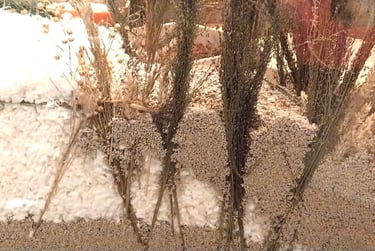
As an example, I've also included photos of my very first setup! (I've since added more sprays, a cork log, birch branch, some coco fibre soil & lots more!) to show how I provide sufficient space & deep bedding to support natural hamster behaviours.
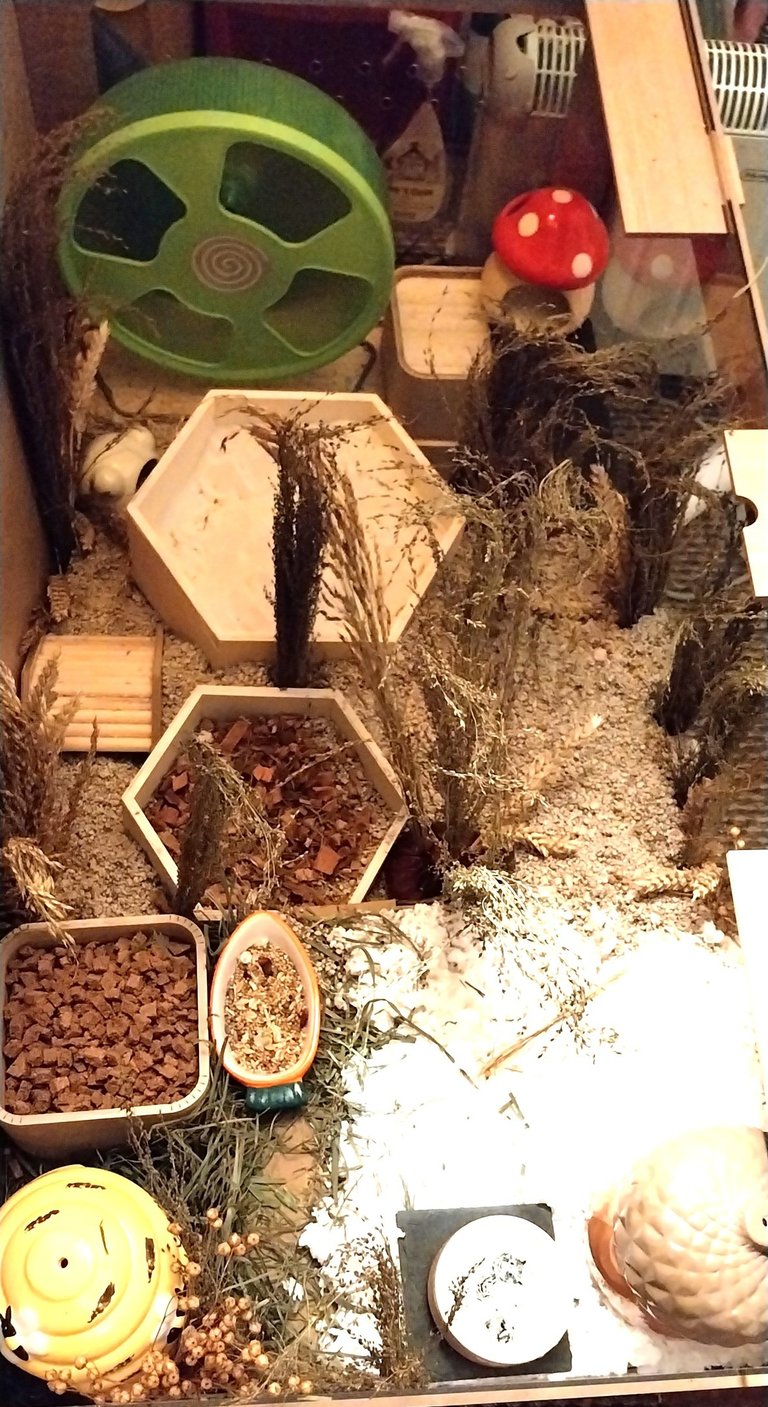
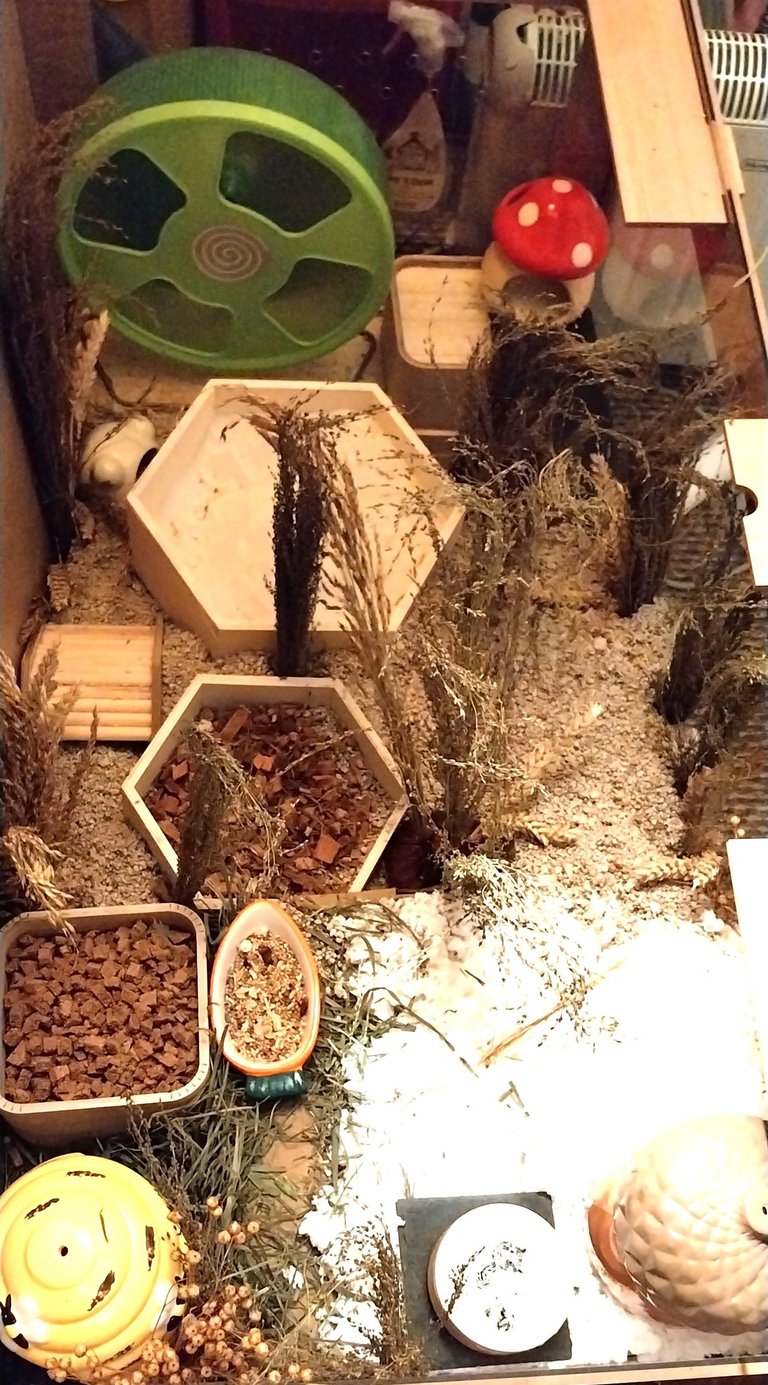
Aerial view - my first ever setup!
Customer Links
Delivery prices
Terms & conditions
Privacy policy
Email: info@treats4squeaks.com
Tel: 07353 785 900
Trading standards registration number: GB891/085
Treats4Squeaks: 2024 ©








Reviews & Trust
Accreditations & Listings



Review us on Facebook here
Treats 4 Squeaks | Natural Treats, Forage & Enrichment for Small Animals

®

