FREE FOOD SAMPLE ON FIRST ORDER £10+ • FREE DELIVERY OVER £25

What Should Rabbits Eat? Complete Rabbit Diet & Nutrition Guide
Everything You Need to Know About Feeding Your Rabbit, Safe Foods, Healthy Treats & Foods to Avoid
RABBIT CARE HUB
Jo
9/2/20254 min read
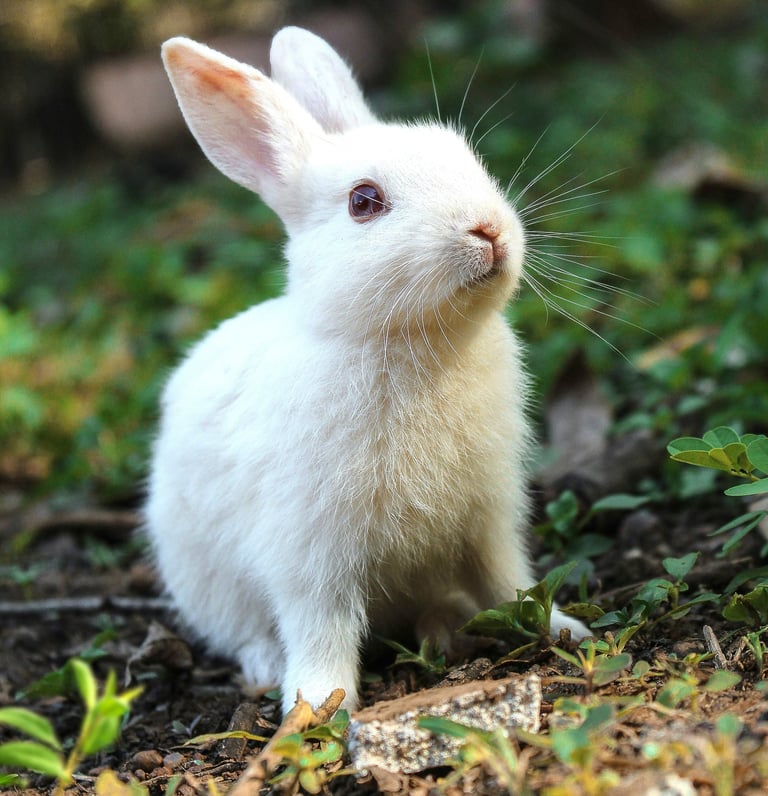
Rabbit Diet Guide: What Do Rabbits Eat?
A healthy rabbit diet is based on fibre, variety, and balance. Feeding the correct foods helps support digestive health, maintain a healthy weight, and naturally wear down a rabbit's continuously growing teeth.
Understanding what rabbits should eat is one of the most important aspects of rabbit care. The majority of a rabbit's diet should consist of hay and grass, with smaller amounts of leafy greens, herbs, pellets, and occasional treats.
Looking for healthy rabbit treats
What Should Rabbits Eat?
A rabbit's diet should consist of:
* 85–90% hay and grass
* 10% leafy greens and herbs
* A small portion of quality rabbit pellets
* Occasional healthy treats
* Unlimited access to fresh water
Hay and Grass (85–90% of the Diet)
Hay is the most important part of a rabbit's diet and should be available at all times.
Good quality grass hays include:
* Timothy hay
* Meadow hay
* Orchard grass hay
* Botanical hay
Hay provides the fibre needed to keep the digestive system functioning properly and helps wear down teeth naturally as rabbits chew.
Without sufficient hay, rabbits are at greater risk of digestive problems, obesity, and dental disease.
Leafy Greens and Herbs (Around 10%)
Fresh greens should be offered daily as part of a balanced rabbit diet.
Safe leafy greens and herbs include:
* Kale
* Spring greens
* Spinach (in moderation)
* Celery leaves
* Cabbage (introduced gradually)
* Mint - Spearmint Leaves – Natural Herb Treat for Small Pets | Treats 4 Squeaks
* Parsley - Parsley Stalks – Natural Herb Stalks for Small Pets | Treats 4 Squeaks
* Rosemary
* Coriander - Coriander Leaves – Natural Forage for Small Pets | Treats 4 Squeaks
* Basil - Basil fine cut for Small Pets – Natural Forage & Enrichment | Treats 4 Squeaks
* Dandelion leaves - Dandelion Treats – Herbal Small Animal Snack Chinchillas, Degus, Gerbils, Guinea Pigs, Hamsters, Mi | Treats 4 Squeaks
* Plantain leaves
Offering a variety of 5–6 different greens each week helps provide enrichment and nutritional balance.
Always wash fresh foods thoroughly before feeding.
Rabbit Pellets
Pellets should only make up a small part of a rabbit's daily diet.
Choose a high-fibre pellet designed specifically for rabbits and feed according to the manufacturer's guidelines based on your rabbit's age and weight.
Muesli-style rabbit foods should be avoided as selective feeding can lead to nutritional imbalances.
Healthy Rabbit Treats
Treats should only be fed occasionally and in small quantities.
Suitable treats include:
* Dried forage
* Safe flowers
* Small amounts of fruit
* Natural rabbit treats made from rabbit-safe ingredients
Fruits and root vegetables such as carrots, bananas and berries contain natural sugars and should be offered sparingly.
Browse our collection of healthy, natural rabbit treats for safe ways to reward your rabbit - Healthy and natural treats for rabbits | Treats 4 Squeaks
Fresh Water
Fresh, clean drinking water should always be available.
Many rabbits prefer drinking from a heavy ceramic bowl, although water bottles can also be used if cleaned and checked daily.
Water should be refreshed every day to encourage healthy hydration.
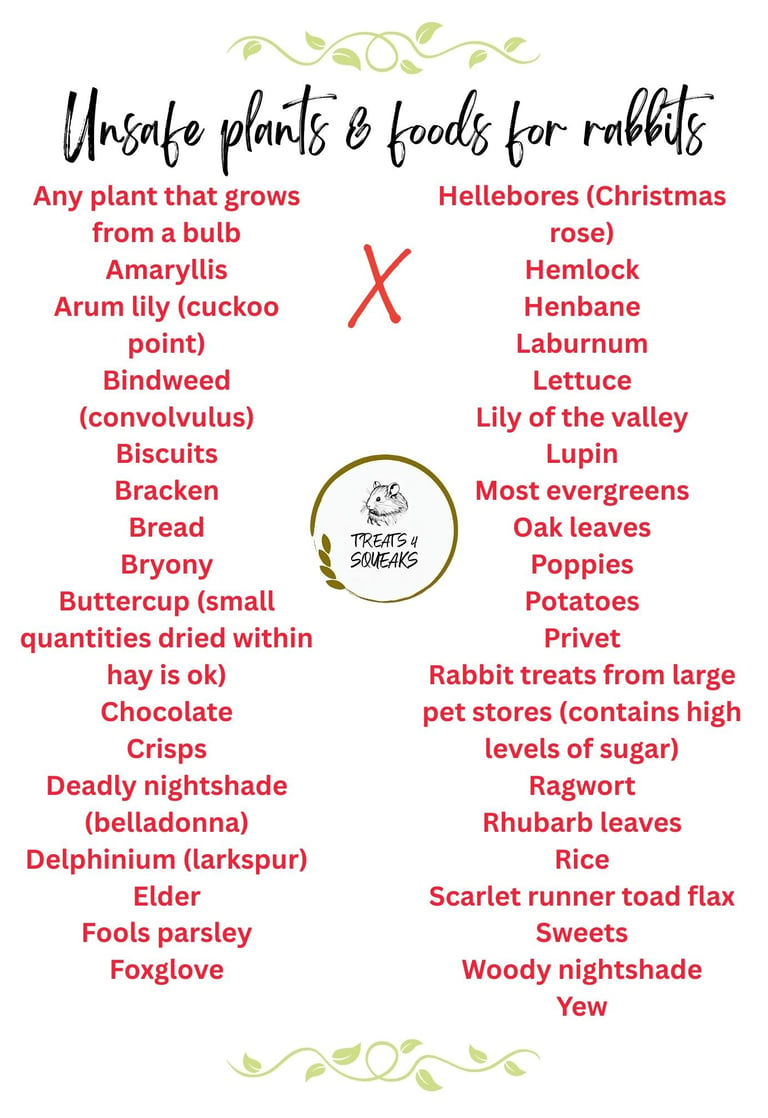
Foods Rabbits Should Avoid
Some foods can be harmful or dangerous for rabbits.
Avoid feeding:
* Chocolate
* Sweets and sugary foods
* Bread
* Crackers
* Cereals
* Onions
* Garlic
* Avocado
* Rhubarb
* Iceberg lettuce
* Lawnmower clippings
Freshly cut grass from a lawnmower can ferment quickly and may cause serious digestive problems.
Rabbit Feeding Tips
* Provide unlimited hay every day.
* Introduce new foods gradually.
* Feed a variety of rabbit-safe greens.
* Limit sugary treats.
* Monitor eating habits and droppings daily.
* Ensure fresh water is always available.
A consistent, high-fibre diet is one of the best ways to support your rabbit's long-term health and wellbeing.
Frequently Asked Questions About Rabbit Diets
What should rabbits eat every day?
Rabbits should have unlimited access to hay, a daily selection of leafy greens, fresh water, and a small portion of quality rabbit pellets.
What is the most important food for rabbits?
Hay is the most important food for rabbits. It supports digestion, promotes dental health, and should make up around 85–90% of their diet.
Can rabbits eat carrots every day?
No. Carrots are relatively high in sugar and should be offered as an occasional treat rather than a daily food. Carrot tops are much better for a rabbits diet.
What vegetables can rabbits eat?
Many rabbits can safely eat kale, spring greens, parsley, mint, coriander, celery leaves, basil, rosemary, and dandelion leaves as part of a varied diet.
Can rabbits eat fruit?
Overall, yes, but only in very small amounts. Fruits such as apples, strawberries, blueberries and bananas should be given occasionally due to their sugar content.
Can rabbits survive without hay?
No. Hay is essential for healthy digestion and dental wear. Rabbits should have access to fresh hay at all times.
Is grass safe for rabbits?
Yes. Fresh grass is a natural food for rabbits and can be fed regularly. However, lawnmower clippings should never be fed because they ferment quickly and may cause digestive problems. Also avoid any grass that has been treated with chemicals or pesticides.
How often should rabbits be fed pellets?
Pellets should be fed daily in moderation alongside unlimited hay and fresh greens. Hay should always remain the primary food source.
What foods are toxic to rabbits?
Foods such as chocolate, onions, garlic, avocado, rhubarb, and processed human foods should never be fed to rabbits.
Can rabbits drink from bowls instead of bottles?
Yes. Many rabbits prefer drinking from ceramic water bowls, although bottles can also be used provided they are cleaned and checked regularly.
Conclusion
A healthy rabbit diet is simple: unlimited hay, fresh greens, clean water, a small amount of quality pellets, and occasional healthy treats. By focusing on fibre-rich foods and limiting sugary snacks, rabbit owners can help support good digestion, healthy teeth, and overall wellbeing throughout their rabbit's life.
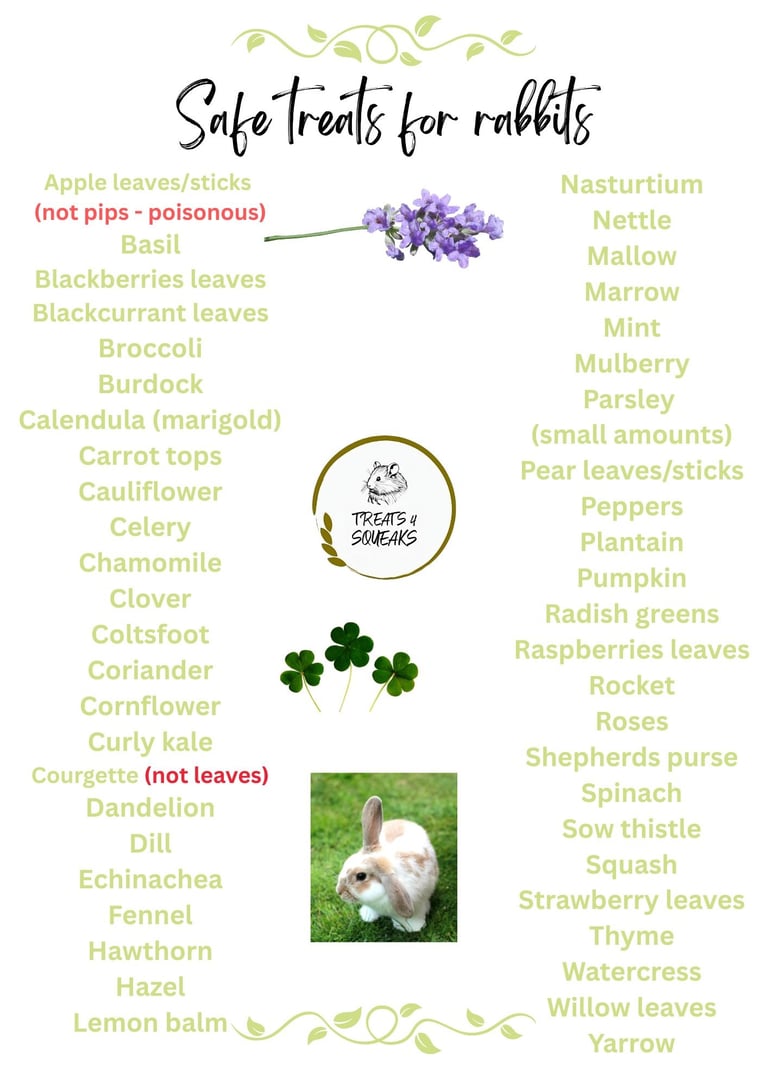
Check out the infographics below -
Related Rabbit Care Guides
Looking to learn more about rabbit care? Explore our other helpful guides:
Rabbit Housing Guide: Minimum Space Requirements, Hutch Sizes & Welfare Standards - What Is the Minimum Space Rabbits Need? | Treats 4 Squeaks
Customer Links
Delivery prices
Terms & conditions
Privacy policy
Email: info@treats4squeaks.com
Tel: 07353 785 900
Trading standards registration number: GB891/085
Treats4Squeaks: 2024 ©






Reviews & Trust
Accreditations & Listings



Review us on Facebook here


Treats 4 Squeaks | Natural Treats, Forage & Enrichment for Small Animals

®

