FREE FOOD SAMPLE ON FIRST ORDER £10+ • FREE DELIVERY OVER £25

Best Natural Treats for Pet Rats: Safe Foods, Healthy Snacks & Feeding Tips
Discover the best natural treats for pet rats, including safe foods, healthy snacks and feeding tips, plus ideas for adding variety and enrichment to their diet.
RAT CARE HUB
Jo
9/18/20255 min read


What Do Pet Rats Eat? A Complete Guide to Rat Nutrition & Healthy Treats
Understanding the Nutritional Needs of Pet Rats
Pet rats are intelligent, social animals that thrive on a balanced and varied diet. Providing the right nutrition is essential for supporting healthy growth, maintaining a healthy weight, and promoting a long, active life.
While a high-quality rat food should form the foundation of your pet's diet, safe natural treats can provide additional enrichment, variety, and valuable nutrients. Offering healthy treats in moderation is also a great way to strengthen the bond between you and your rats while encouraging natural foraging behaviours.
Looking for Healthy Rat Treats? →
What Should Pet Rats Eat?
A healthy pet rat diet should consist of:
A high-quality, nutritionally complete rat food
Fresh vegetables
Small amounts of fruit
Occasional nuts and seeds
Fresh water available at all times
Choosing a Good Rat Food
The best rat foods are nutritionally complete and designed specifically for rats. Complete foods, such as Isamu Rat Care Complete, help ensure your pets receive a balanced diet in every meal and reduce the risk of nutritional deficiencies caused by selective feeding. A quality rat food should always form the majority of your rats' daily diet, with fresh foods and treats offered as supplements rather than replacements. Treats should only complement your rat's main diet and should never replace a balanced food source.
Safe and Healthy Treats for Pet Rats
Many natural foods can be safely offered as occasional treats for pet rats.
Fruits
Fruit can be a tasty reward and provides vitamins, minerals, and natural antioxidants.
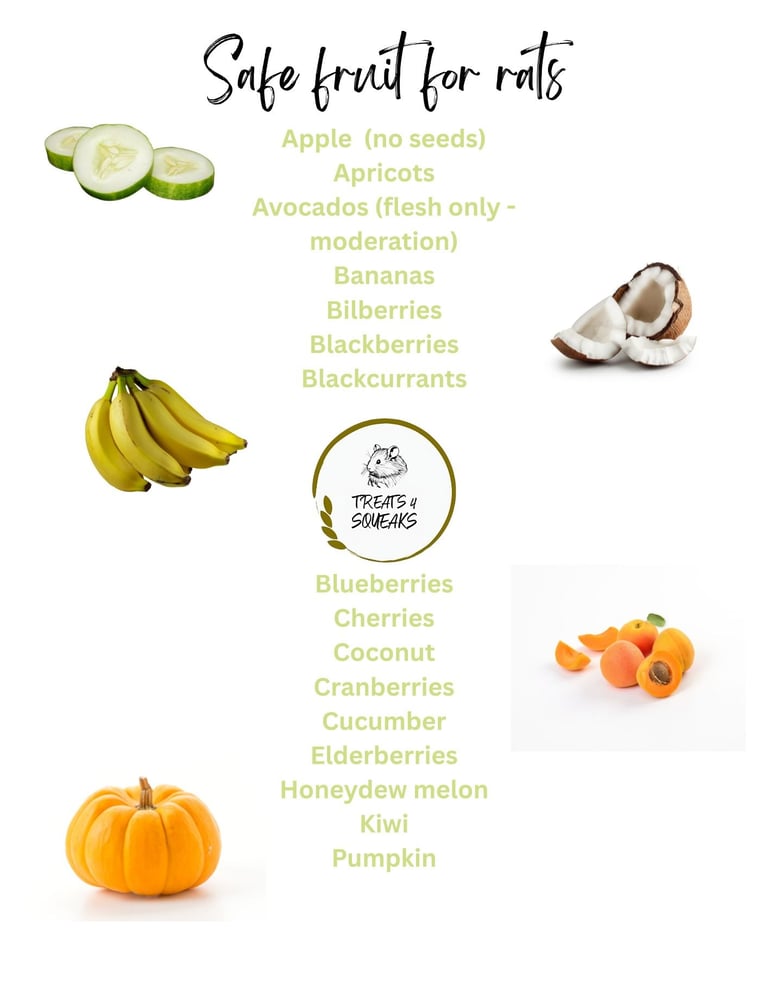
Safe fruits for rats include:
Apple (without seeds) - Apple slices | Treats 4 Squeaks
Banana - Banana bites | Treats 4 Squeaks
Blueberries
Strawberries - Strawberry slices | Treats 4 Squeaks
Raspberries
Because fruit contains natural sugars, it should only be offered in small quantities.
Vegetables
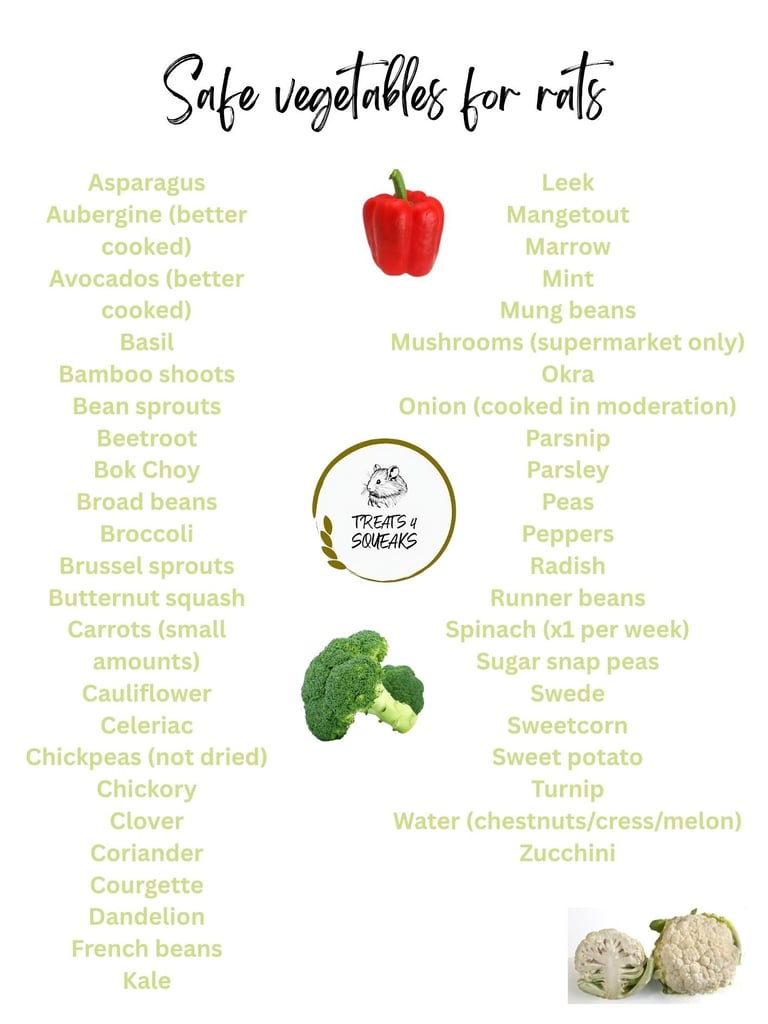
Fresh vegetables are an excellent addition to a rat's diet and can be offered regularly.
Popular choices include:
Carrot - Carrot Flakes – Natural Treat for Small Pets | Treats 4 Squeaks
Bell peppers - Peppers – Natural Dried Pepper Pieces for Small Pets | Treats 4 Squeaks
Broccoli
Cucumber
Peas - Pea Flakes – Natural Treat for Small Pets | Treats 4 Squeaks
Leafy greens
Vegetables provide important vitamins, minerals, and fibre while adding variety and enrichment.
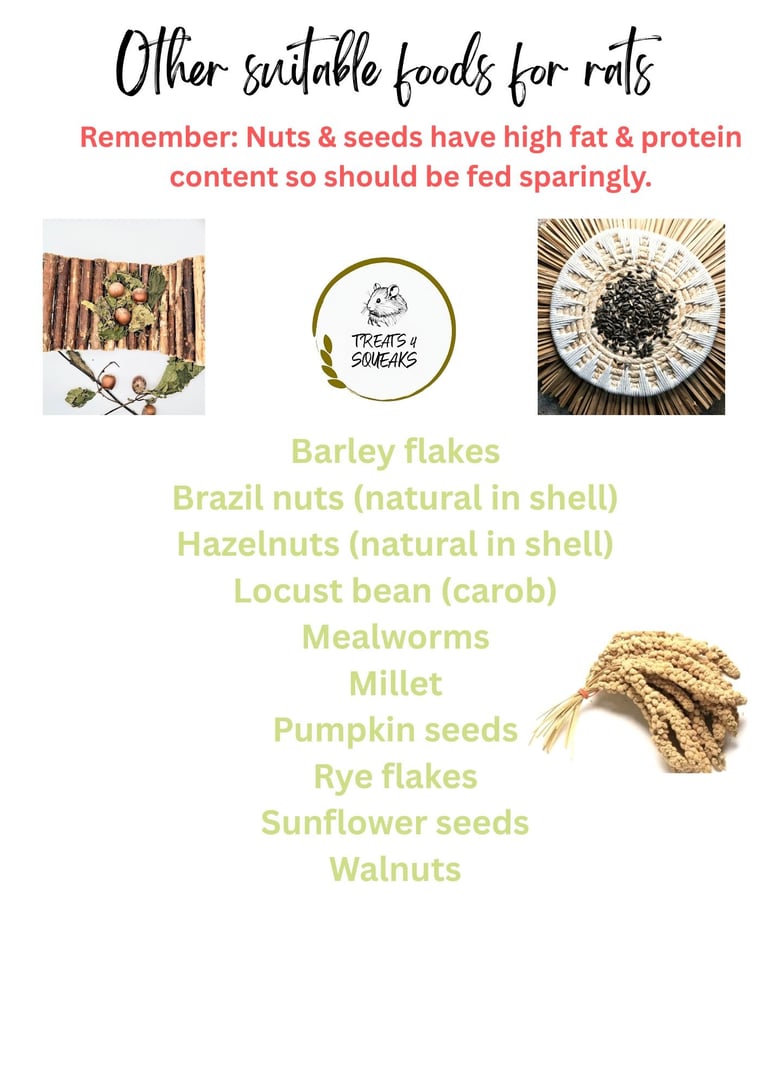
Nuts and Seeds
Many rats enjoy nuts and seeds as an occasional treat.
Suitable options include:
Sunflower seeds - Black Sunflower Seeds – Natural Treat for Small Pet | Treats 4 Squeaks
Pumpkin seeds - Pumpkin Seeds – Natural Treat for Small Pets | Treats 4 Squeaks
Hazelnuts - Hazelnuts – Natural Treat for Small Pets | Treats 4 Squeaks
Walnuts - Whole Walnuts – Natural Foraging Treat for Small Pets | Treats 4 Squeaks
Almonds (unsalted)
Due to their higher fat content, nuts and seeds should be fed sparingly.
Whole Grains
Whole grains can provide additional fibre and variety.
Safe options include:
Plain oats
Wholegrain pasta
Brown rice
Wholegrain bread
Unsweetened cereals
Always avoid products high in sugar, salt, or artificial flavourings.
Why Natural Treats Are Good for Pet Rats?
Natural treats provide more than just nutrition.
Benefits include:
Mental stimulation
Environmental enrichment
Positive training opportunities
Bonding with owners
Encouraging natural foraging behaviours
Rotating different safe treats can help keep feeding time interesting and engaging.
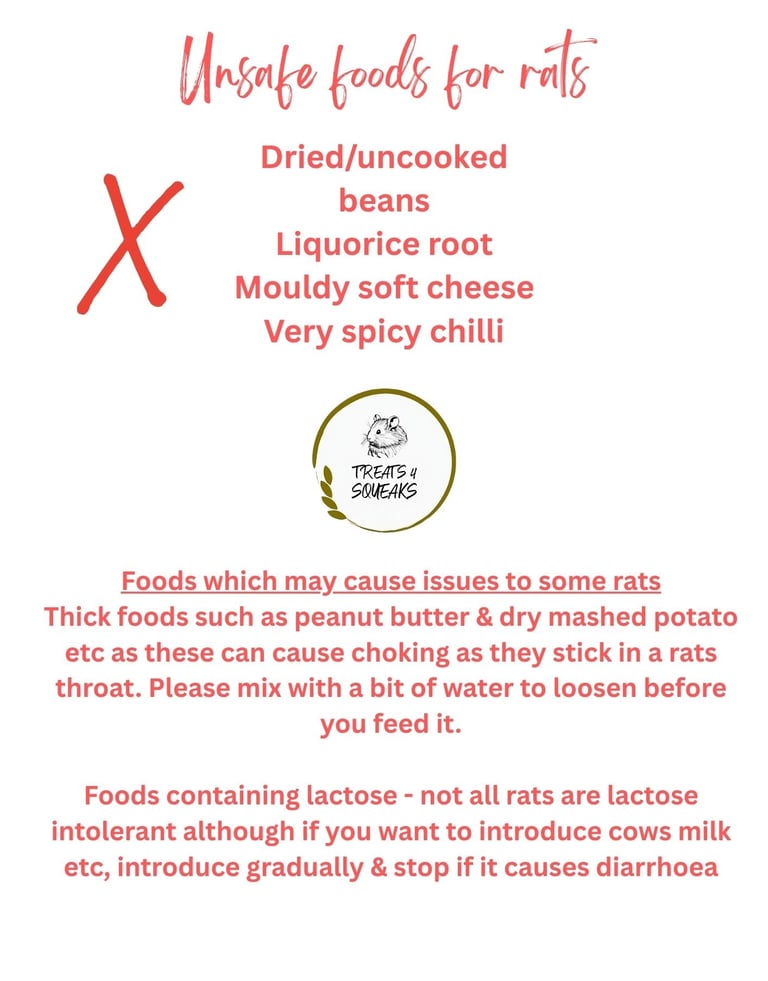
Foods Pet Rats Should Avoid
Not all human foods are safe for rats.
Avoid feeding:
Chocolate
Caffeine
Alcohol
Blue cheese
Citrus fruits including mango for male rats.
Green potato
Raw red kidney beans
Sugary sweets
Salty snacks
Highly processed foods
Dairy products (although not all rats are lactose intolerant)
Mango (male rats only).
When introducing any new food, offer a small amount first and monitor your rat for any digestive upset.
Feeding Tips for Pet Rat Owners
Provide a nutritionally complete rat food as the main diet.
Introduce new foods gradually.
Offer a variety of safe fruits and vegetables.
Keep treat portions small.
Remove uneaten fresh food promptly.
Ensure fresh, clean water is always available.
A varied diet combined with enrichment and proper care helps support a healthy and happy pet rat.
Natural Rat Treats
Looking for safe treats for your rats?
Our collection of natural rat treats includes carefully selected forage, flowers, herbs, and other rat-safe options that can be offered as part of a balanced diet - Natural Rat Treats | Treats 4 Squeaks
Remember that every rat is different, and this guide is not an exhaustive list of safe foods. Always research unfamiliar foods before offering them and feed treats in moderation.
Frequently Asked Questions About Pet Rat Diets
What do pet rats eat?
Pet rats should eat a high-quality rat food supplemented with fresh vegetables, small amounts of fruit, occasional nuts and seeds, and constant access to fresh water.
What is the best food for pet rats?
A nutritionally complete rat food formulated specifically for rats should form the foundation of their diet. Fresh foods and treats should be offered alongside this in moderation.
Can rats eat fruit?
Yes. Rats can safely eat many fruits, including apples, bananas, strawberries, blueberries, and pears. Fruit should be offered in small quantities due to its sugar content. Please note, mango is not suitable for male rats as can cause kidney problems.
Can rats eat vegetables every day?
Yes. Many vegetables can be fed regularly as part of a balanced diet. Popular options include carrots, broccoli, cucumber, peppers, and leafy greens.
Are nuts safe for rats?
Most unsalted nuts are safe when offered occasionally. Because they are high in fat, they should be fed as treats rather than daily foods.
What foods are toxic to rats?
Foods such as chocolate, caffeine, alcohol, blue cheese, raw kidney beans, and highly processed snacks should not be fed to rats.
How often should rats have treats?
Treats should only make up a small part of a rat's overall diet and are best offered a few times per week in moderation.
Can rats eat human food?
Some fresh human foods such as fruits, vegetables, oats, and whole grains can be safe for rats. However, processed foods high in sugar, salt, or fat should be avoided.
Do pet rats need fresh water?
Yes. Fresh, clean drinking water should be available at all times and changed daily.
What are the healthiest treats for rats?
Healthy rat treats include fresh vegetables, small amounts of fruit, herbs, flowers, forage mixes, and natural rat-safe treats specifically designed for small pets - Natural Rat Treats | Treats 4 Squeaks
Conclusion
A healthy pet rat diet starts with a high-quality staple food and is enhanced by a variety of safe, natural treats. Fresh vegetables, occasional fruit, nuts, seeds, and whole grains can provide valuable nutrition and enrichment when fed in moderation.
By understanding your rats' nutritional needs and offering a balanced diet, you can help support their health, happiness, and wellbeing throughout their lives.
Customer Links
Delivery prices
Terms & conditions
Privacy policy
Email: info@treats4squeaks.com
Tel: 07353 785 900
Trading standards registration number: GB891/085
Treats4Squeaks: 2024 ©







Reviews & Trust
Accreditations & Listings



Review us on Facebook here


Treats 4 Squeaks | Natural Treats, Forage & Enrichment for Small Animals


®

